THE FOUNDATION OF A PROFESSIONAL SUGARING TREATMENT
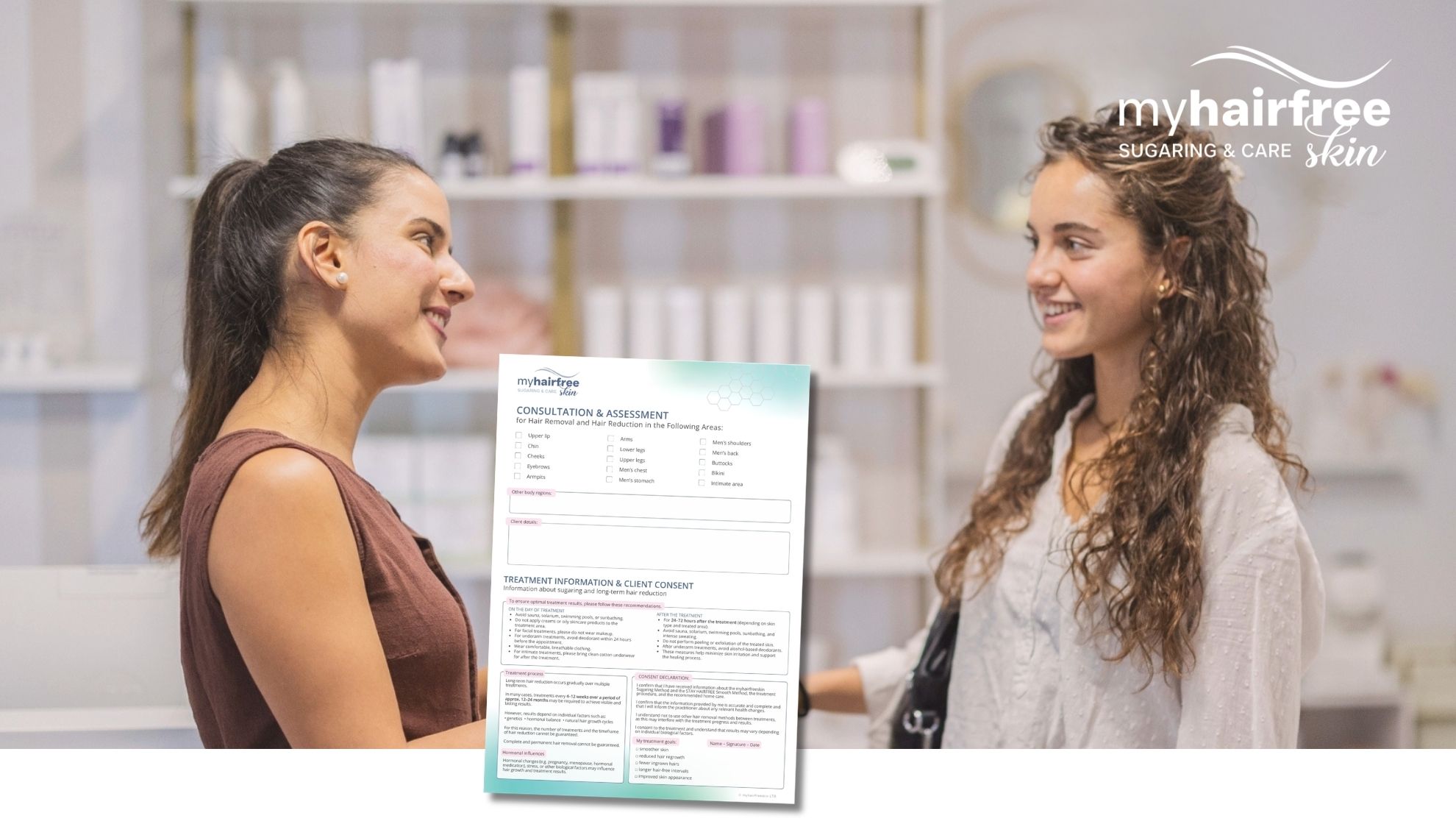
Careful preparation helps you tailor each treatment to the client’s skin, hair growth and individual needs. It provides the foundation for safe, hygienic and skin-friendly application.
1. CLIENT CONSULTATION & SKIN ANALYSIS
Before starting the treatment, clarify:
- Which body areas will be treated?
- What is the current condition of the skin?
- Are there any skin irritations, injuries or other abnormalities?
- Have exfoliating products, potentially irritating skincare ingredients or other hair removal methods been used recently?
- Are there any known sensitivities or relevant medical conditions?
Important:
Do not treat open, infected or acutely inflamed skin. If any skin changes are unclear, postpone treatment until they have been assessed.
2. ASSESS HAIR LENGTH & GROWTH
Check that the hair is long enough for the sugar paste to grip it effectively.
Also consider hair growth direction, hair density and varying growth patterns within the same treatment area.
3. PREPARE YOUR WORKSTATION
Before starting, prepare all necessary products and materials:
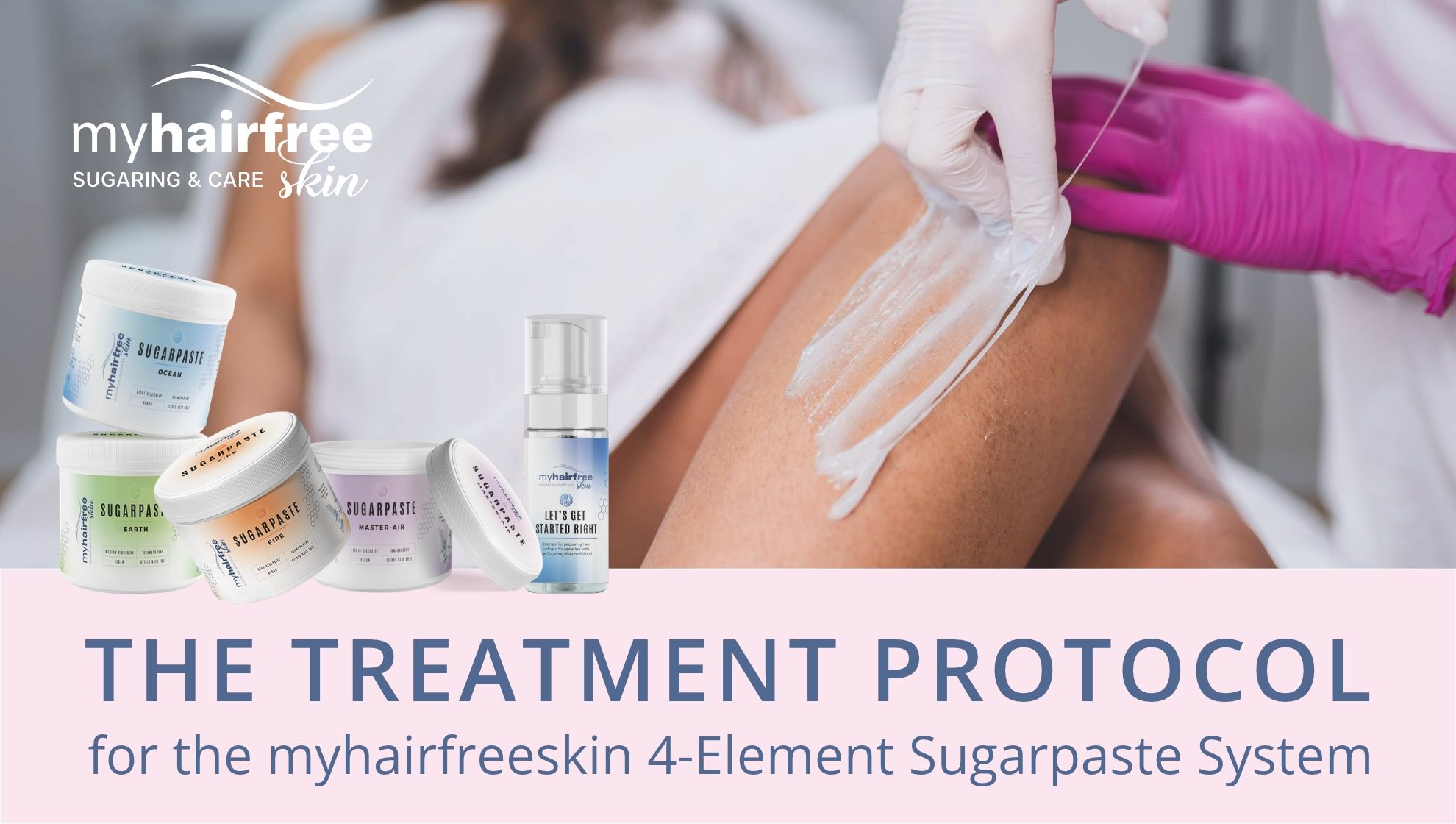
- All four sugar pastes: FIRE · EARTH · OCEAN · AIR
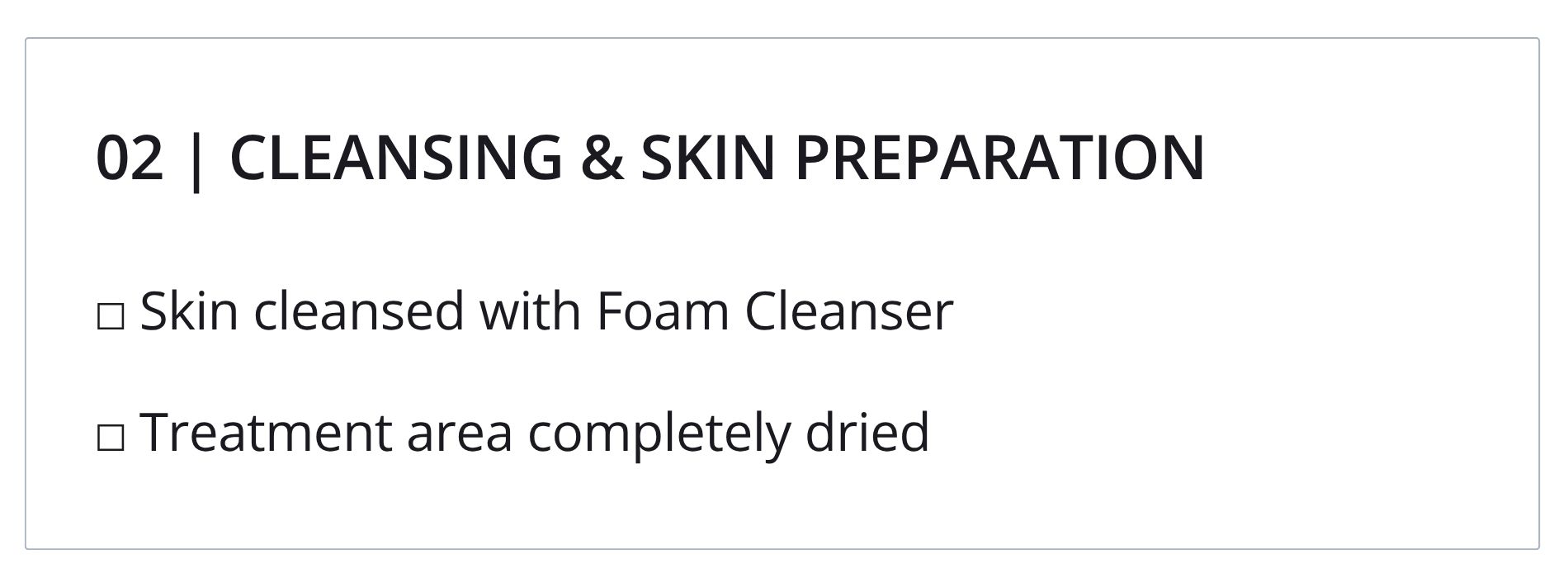
- Let’s-Get-Started-Right Foam Cleanser for skin cleansing
- STAY HAIRFREE Enzyme-DUO, if the treatment includes Hair Reduction
- STAY HAIRFREE HomeCare products for aftercare recommendations
- Disposable gloves, clean towels and hygienic working materials
Maintain a clean workstation and hygienic product handling.
PRACTICAL TIPS
Keep all four paste consistencies within reach so you can select, combine or change them during treatment.
In cooler environments, FIRE and/or EARTH may be gently warmed if needed.
WELL-PREPARED SKIN IS THE FOUNDATION OF PROFESSIONAL SUGARING
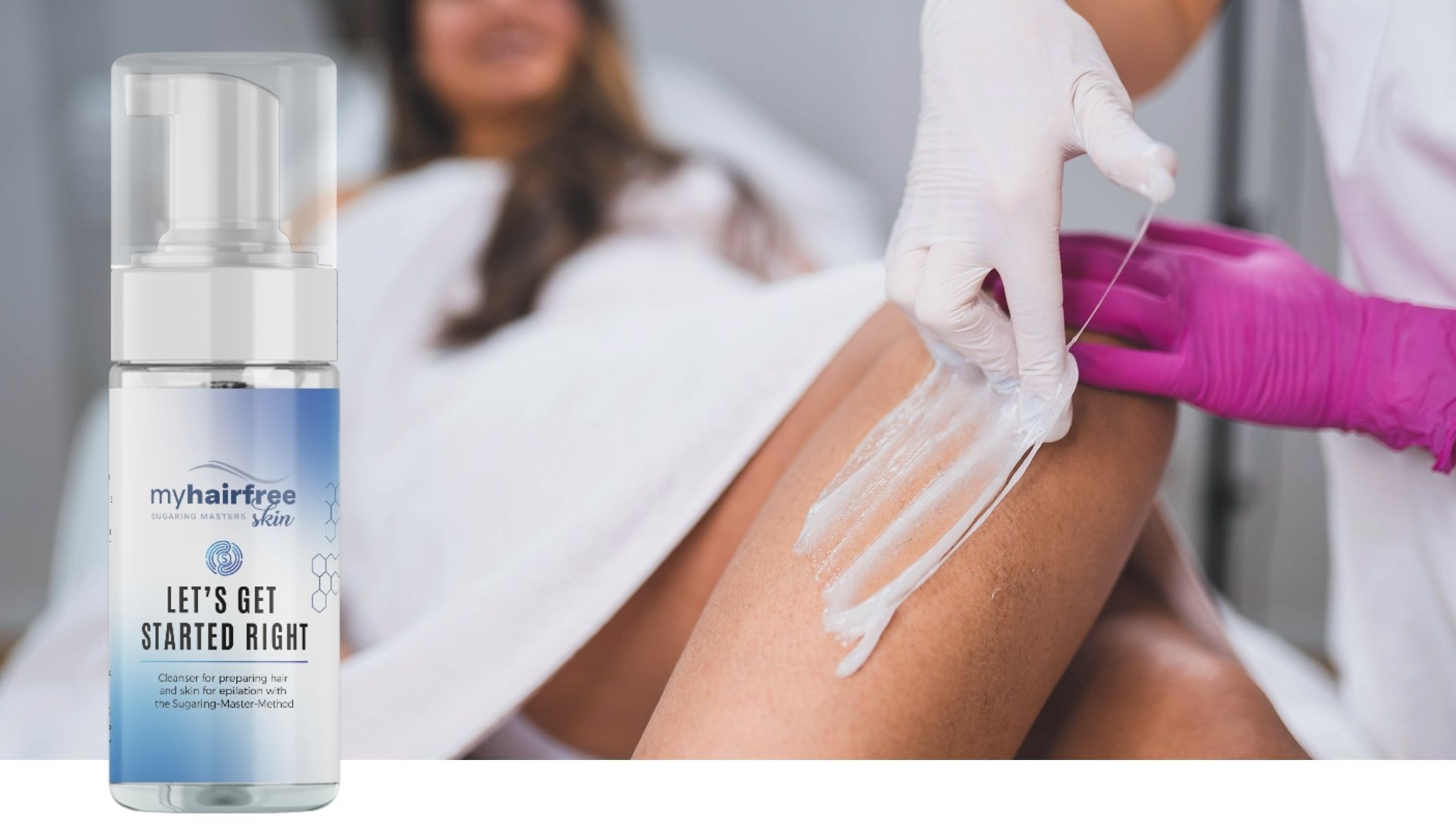
Thorough yet gentle cleansing removes surface residue and prepares the skin for controlled Sugaring epilation.
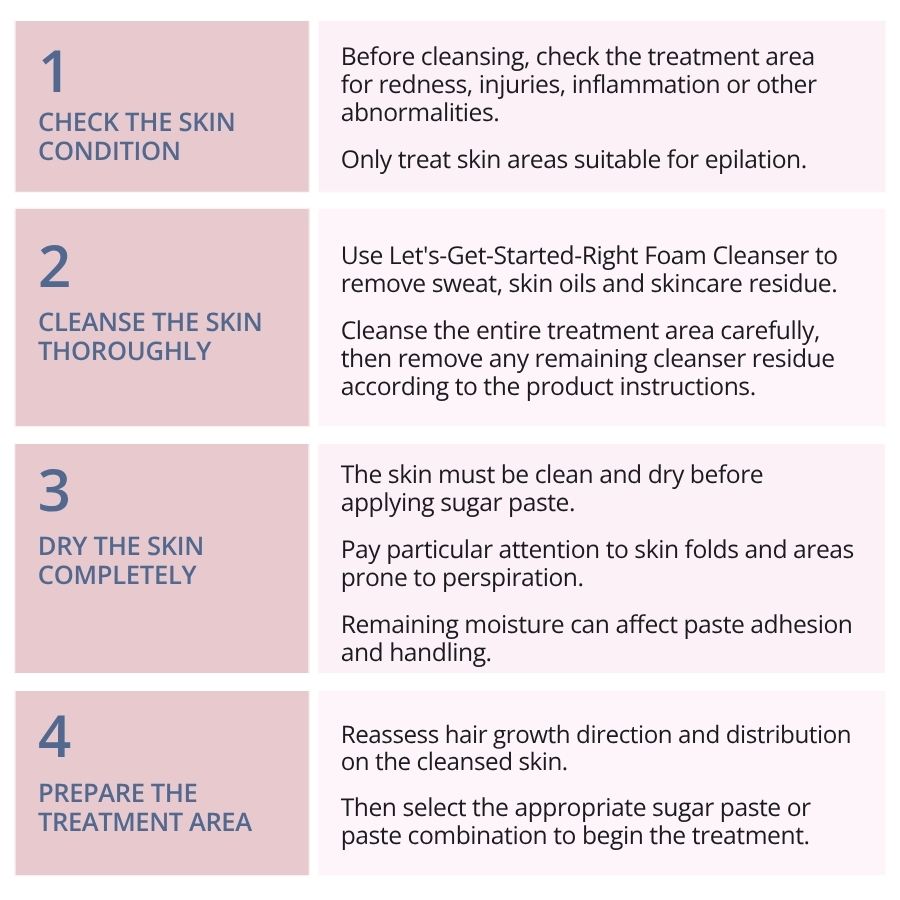
PRACTICAL TIP
A clean, dry skin surface supports controlled sugar paste application. Avoid oil-based skincare products before epilation, as they may interfere with adhesion.
THE RIGHT CONSISTENCY FOR EVERY TREATMENT
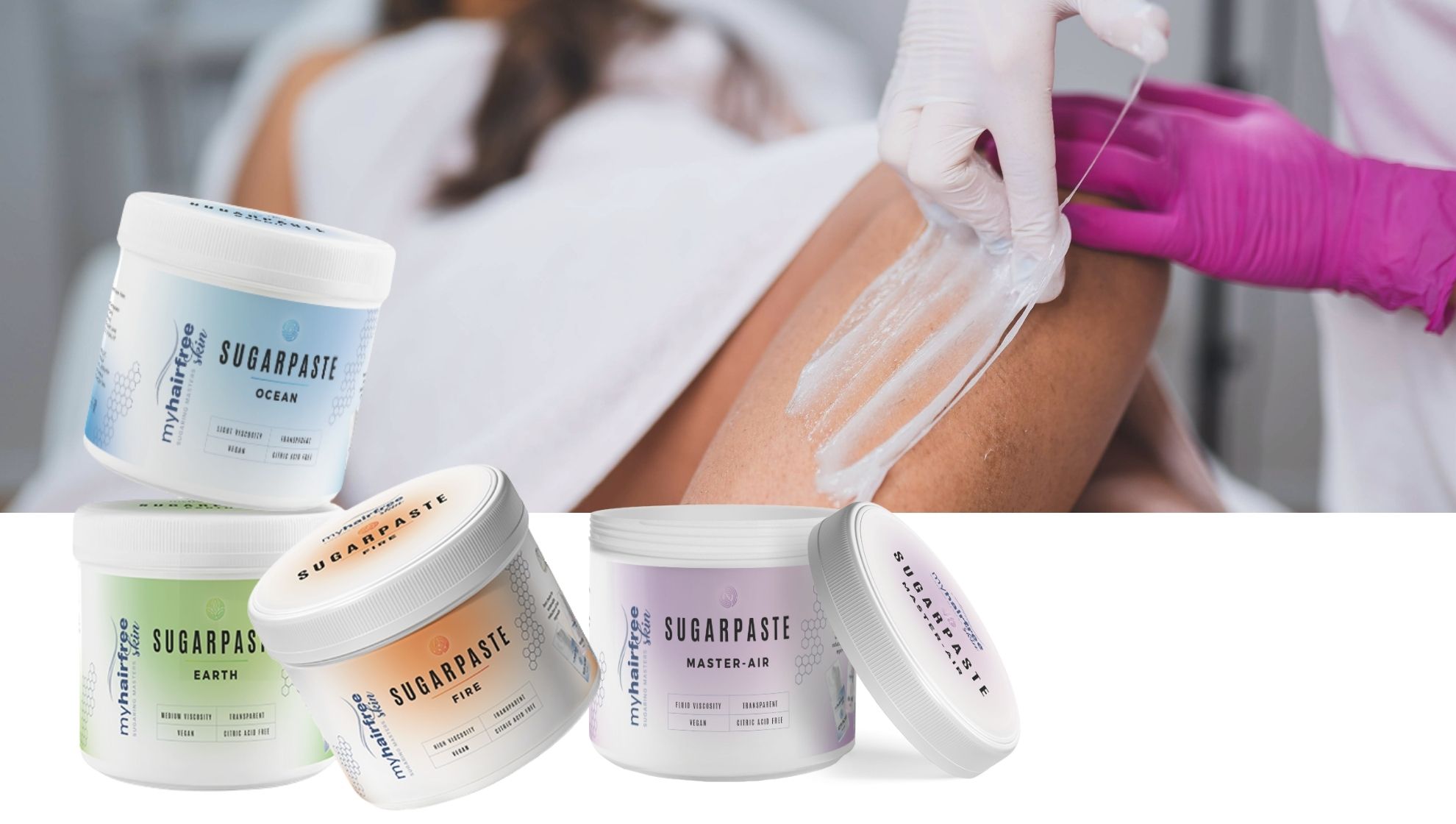
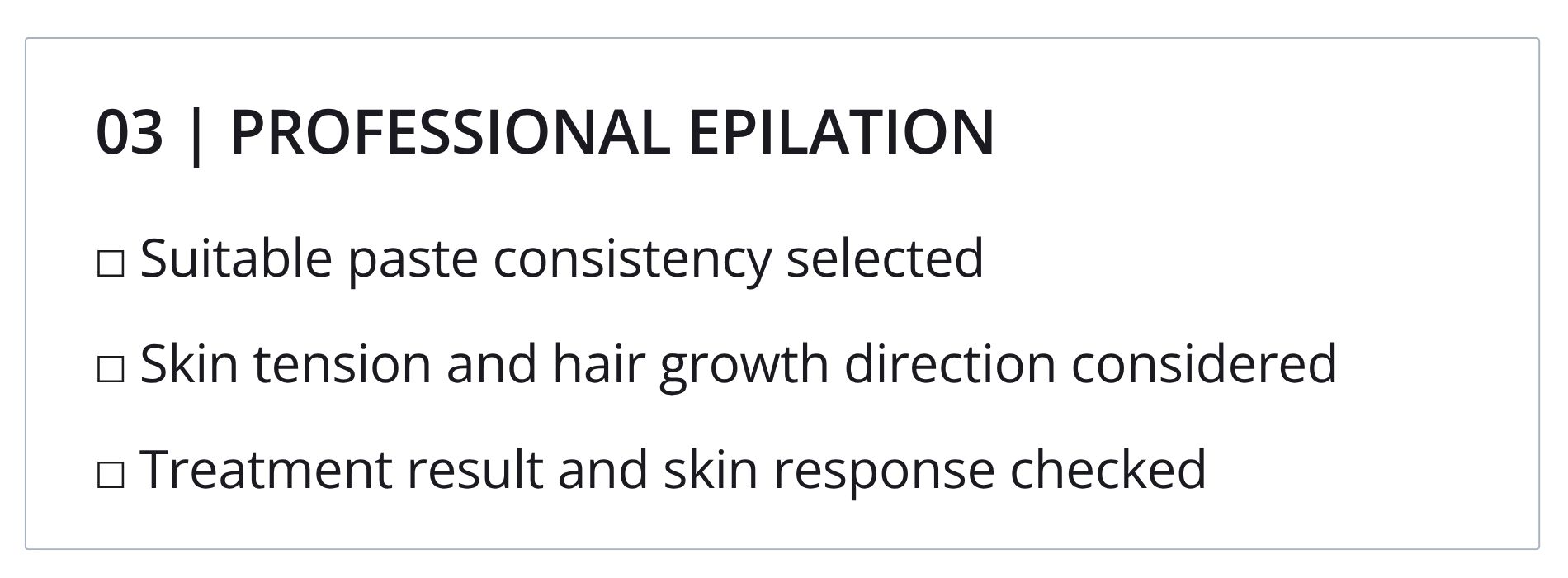
With the four sugar pastes FIRE, EARTH, OCEAN and AIR, you can adapt paste consistency to your working conditions and each individual treatment.
1. ASSESS THE TREATMENT CONDITIONS
When selecting your sugar paste, consider:
- Room and skin temperature
- Treatment area and hair characteristics
- Moisture and heat generated during treatment
- Your application technique and working speed
2. USE THE FOUR PASTES FLEXIBLY
FIRE · EARTH · OCEAN · MASTER AIR
Keep all four consistencies available so you can select the right paste or combine different consistencies.
Start with a consistency that you can control comfortably under the current conditions.
3. ADJUST CONSISTENCY DURING TREATMENT
Observe how the sugar paste behaves during application.
If it becomes too soft or difficult to control, adjust the consistency by combining it with a suitable firmer paste.
MASTER AIR can also be used to fine-tune the consistency
PRACTICAL TIP
The right sugar paste depends on more than the treatment area.
What matters is how well you can control the consistency under the current conditions.
VIDEO-TIP | SUGARING PRACTICE GUIDE:
Our Video Library demonstrates how to select, combine and adjust the four sugar pastes in practical treatments.
CONTROLLED TECHNIQUE FOR SKIN-FRIENDLY EPILATION
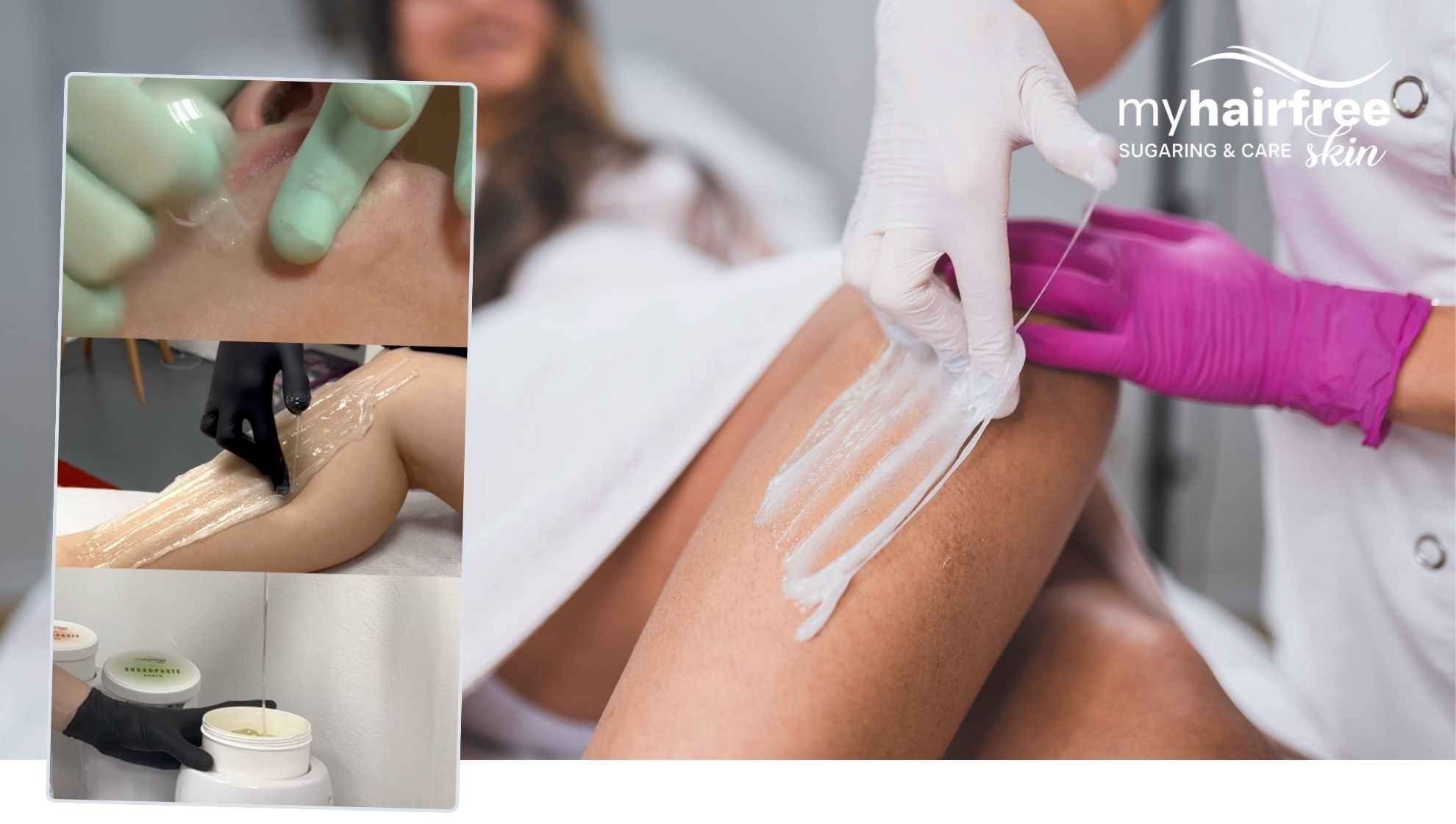
Proper application technique is essential for thorough, skin-friendly hair removal. Focus on controlled movements, adequate skin tension and the right paste consistency.
1. APPLY THE SUGAR PASTE
Apply the sugar paste against the direction of hair growth using controlled pressure.
Work in manageable sections and adjust the size of the treatment area to the body zone and your application technique.
2. STRETCH THE SKIN & REMOVE THE PASTE
Maintain proper skin tension during paste removal.
Remove the sugar paste with a short, controlled movement in the direction of hair growth, keeping the movement as parallel to the skin surface as possible.
Avoid pulling upwards to minimise unnecessary stress on the skin.
3. CONTINUE THE TREATMENT SYSTEMATICALLY
Work section by section, paying attention to different hair growth directions within the treatment area.
Regularly check the treatment result and the skin’s response.
Avoid unnecessary repeated application to already irritated skin.
4. MONITOR PASTE CONSISTENCY
Observe how skin warmth, room temperature and handling affect the sugar paste during treatment.
Adjust the consistency by combining it with another sugar paste or switching to a more suitable consistency when needed.
VIDEO-TIP | SUGARING PRACTICE GUIDE:
Our Video Library demonstrates professional application techniques step by step – from applying the sugar paste to controlled removal.
SOOTHE THE SKIN. COMPLETE THE TREATMENT WITH CARE.
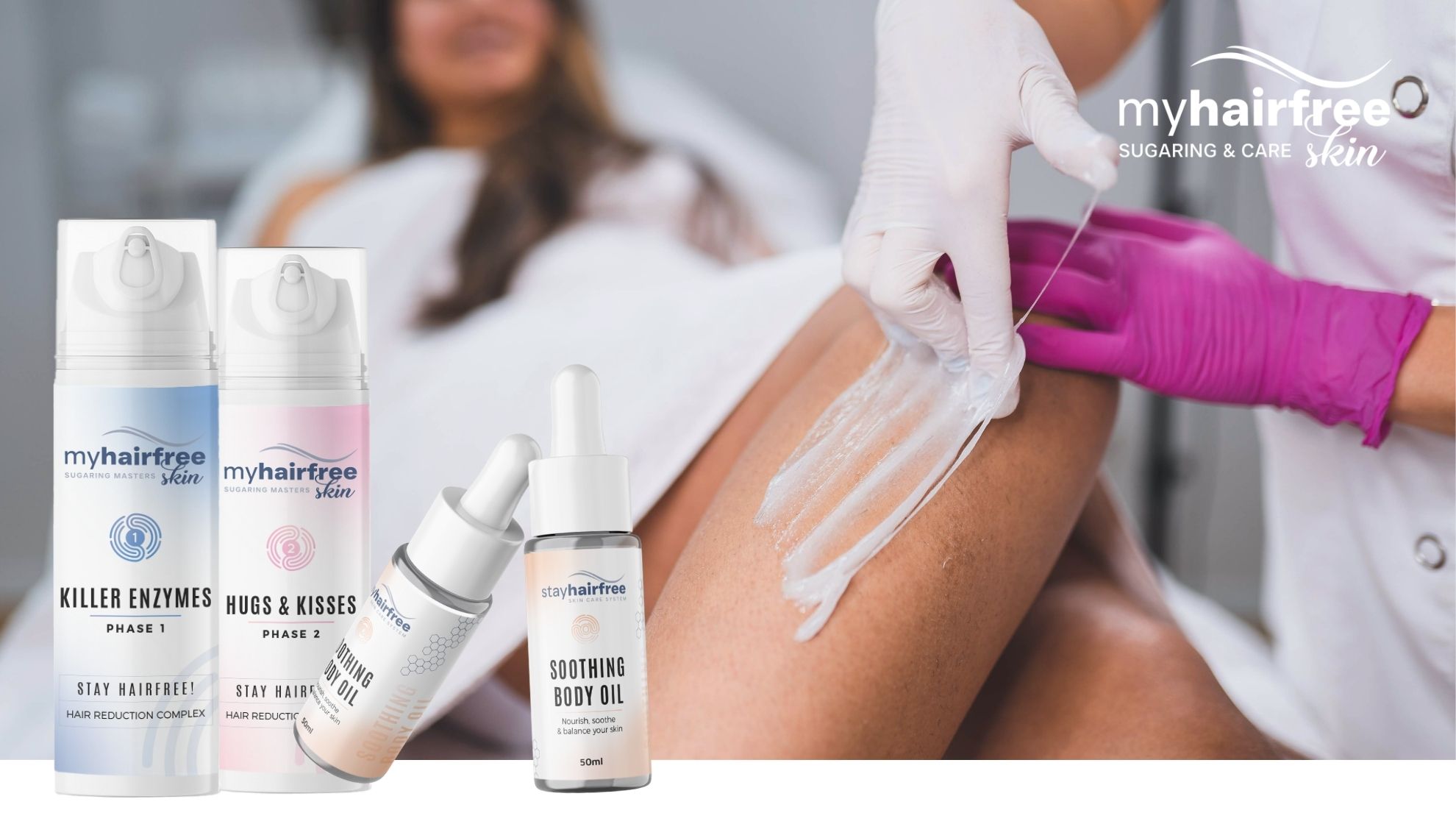
After Sugaring epilation, the focus is on assessing the skin condition, providing appropriate post-treatment care and recommending an individual skincare routine.
1. CHECK THE TREATMENT RESULT
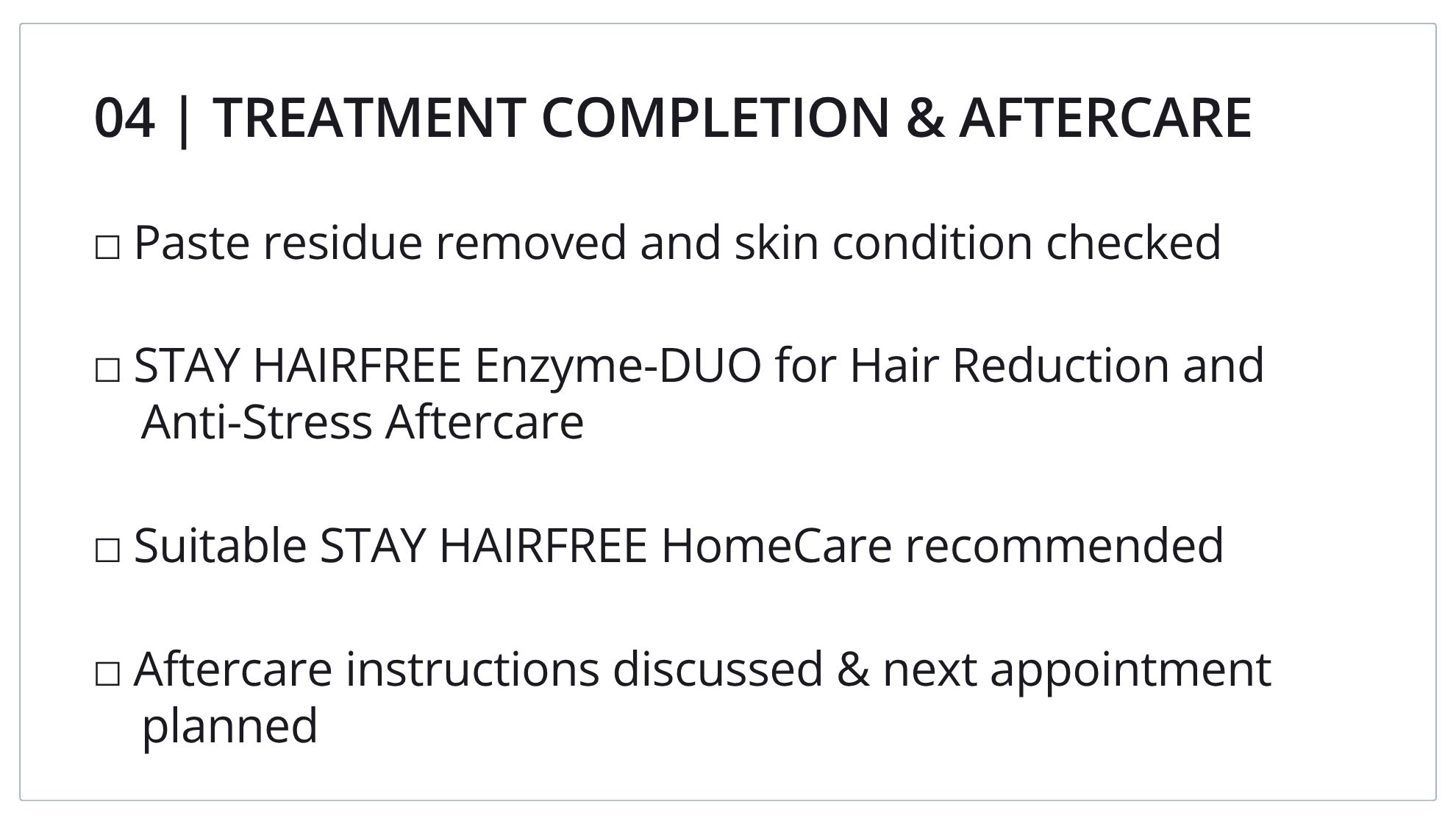
Check the treated skin for remaining hairs, paste residue and possible skin reactions.
Remove any remaining sugar paste with water and cleanse the skin gently. Avoid unnecessary friction or repeated epilation on irritated skin.
2. HAIR REDUCTION & ANTI-STRESS AFTERCARE WITH ENZYME-DUO
The STAY HAIRFREE Enzyme-DUO combines enzymatic Hair Reduction with soothing Anti-Stress Aftercare in one professional treatment, applied immediately after Sugaring epilation.
Apply both phases consecutively according to the STAY HAIRFREE Treatment Manual.
3. RECOMMEND HOMECARE
Advise your client on suitable skincare following the treatment.
Our STAY HAIRFREE HomeCare products support the ongoing skincare routine:
- Soothing Body Oil – Soothing care for sensitive skin areas
- Sugar Scrub – Exfoliating care to remove dead skin cells
- SOS Purify – Targeted care for skin blemishes and to help prevent ingrown hairs
Explain how and when to use each product correctly.
4. PLAN THE NEXT APPOINTMENT
Discuss the skin’s response, aftercare recommendations and the expected timing of the next treatment.
When combined with Hair Reduction, further treatment intervals follow the STAY HAIRFREE treatment plan.
PRACTICAL TIP:
Always distinguish between immediate in-salon treatment and subsequent HomeCare.
Exfoliating products should not be used on freshly epilated, irritated skin.
MANAGING COMMON CHALLENGES WITH CONFIDENCE
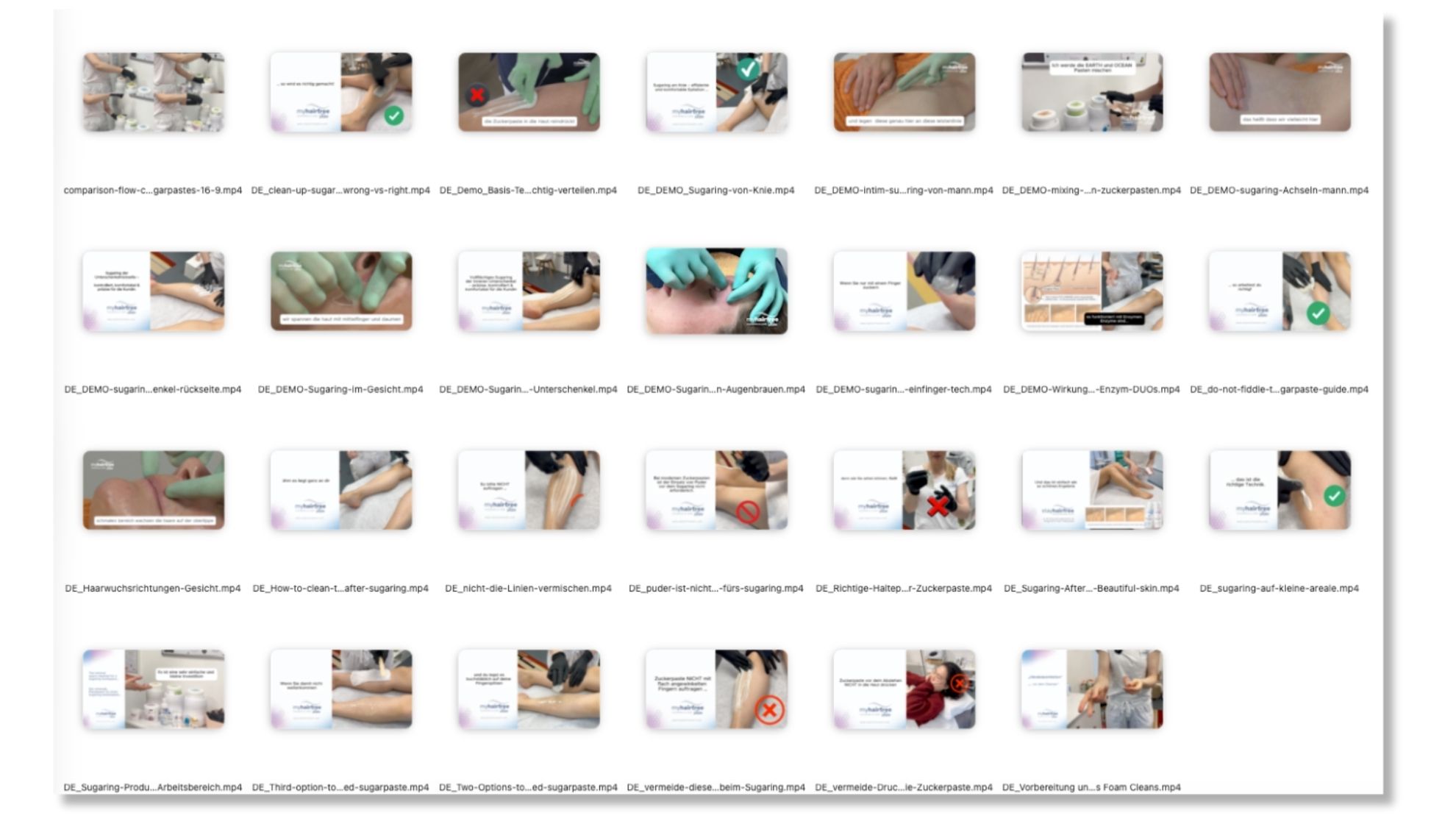
Even during professional Sugaring treatments, working conditions can change. The key is to identify the cause and adjust your technique accordingly.
1. THE SUGAR PASTE BECOMES TOO SOFT
Possible cause: High skin or room temperature, prolonged handling or an overly soft starting consistency.
Solution: Combine the paste with a firmer consistency or switch to a more suitable paste.
In warmer conditions, keeping replacement pastes cool can be helpful.
2. THE PASTE DOES NOT ADHERE PROPERLY
Possible cause: Moisture, skin oils, product residue or an unsuitable paste consistency.
Solution: Check that the skin is clean and completely dry. Adjust the paste consistency and application technique if needed.
3. HAIRS BREAK OR REMAIN AFTER TREATMENT
Possible cause: Insufficient skin tension, incorrect removal direction, unsuitable hair length or poorly controlled technique.
Solution: Check hair growth direction, skin tension and removal angle. Remove the paste with a short movement in the direction of hair growth, as parallel to the skin as possible.
4. THE SKIN REACTS SENSITIVELY
Possible cause: Individual skin sensitivity, repeated treatment of the same area or excessive mechanical stress.
Solution: Reduce stress on the skin, avoid unnecessary repeated application and stop epilation on visibly irritated areas. Assess the skin’s response and provide appropriate aftercare advice.
VIDEO-TIP | SUGARING PRACTICE GUIDE:
Find detailed demonstrations of paste adjustments, application techniques and solutions to common Sugaring challenges in our Video Library.
PRACTICAL TIP:
Don’t try to solve every application problem by applying more pressure or repeatedly treating the same area.
Often, a different paste consistency, an adjusted technique or a short break is enough.
EVERY STEP COVERED. FROM PREPARATION TO AFTERCARE.
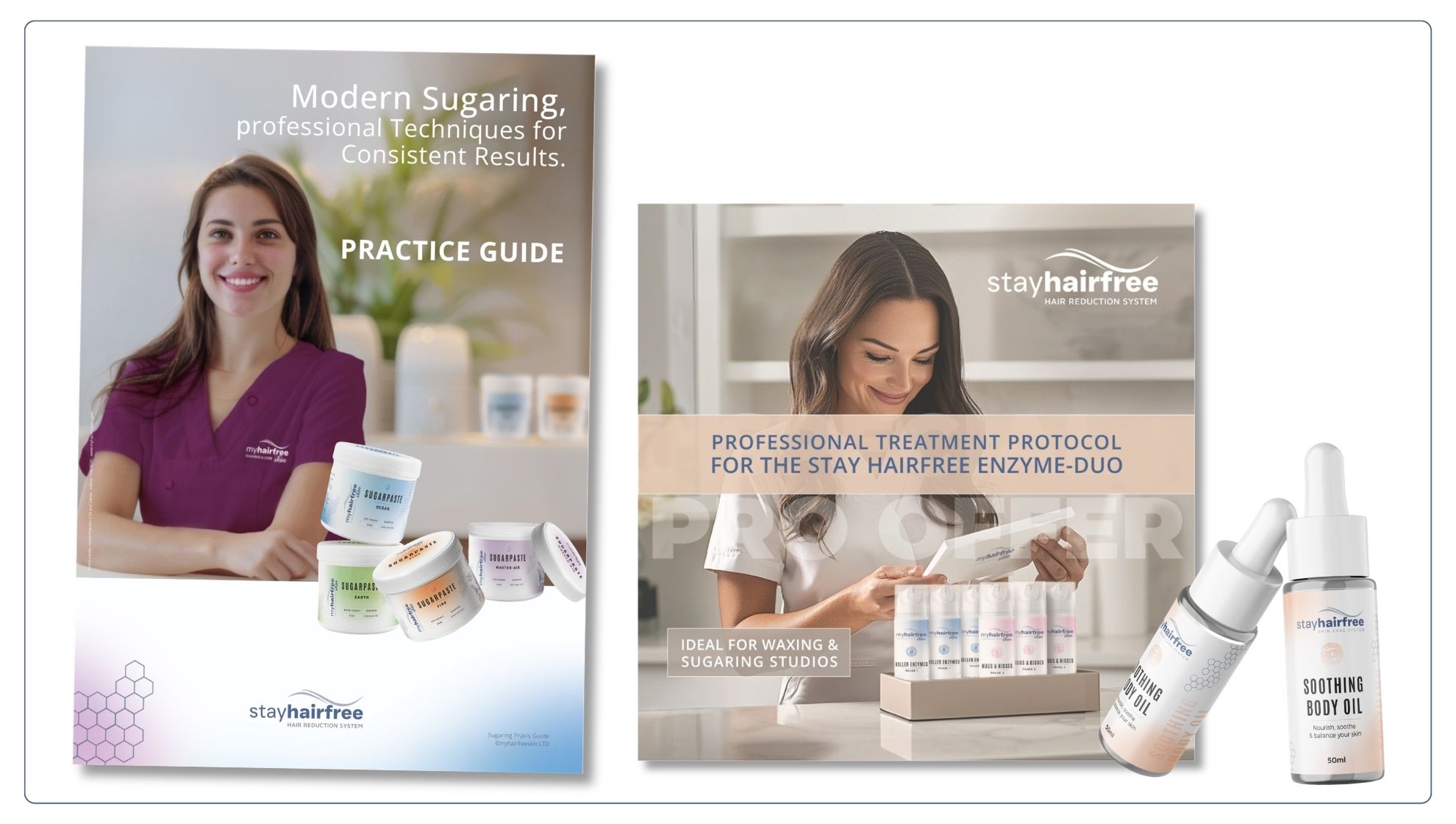
A structured treatment process supports consistent quality, skin-friendly application and professional client care.
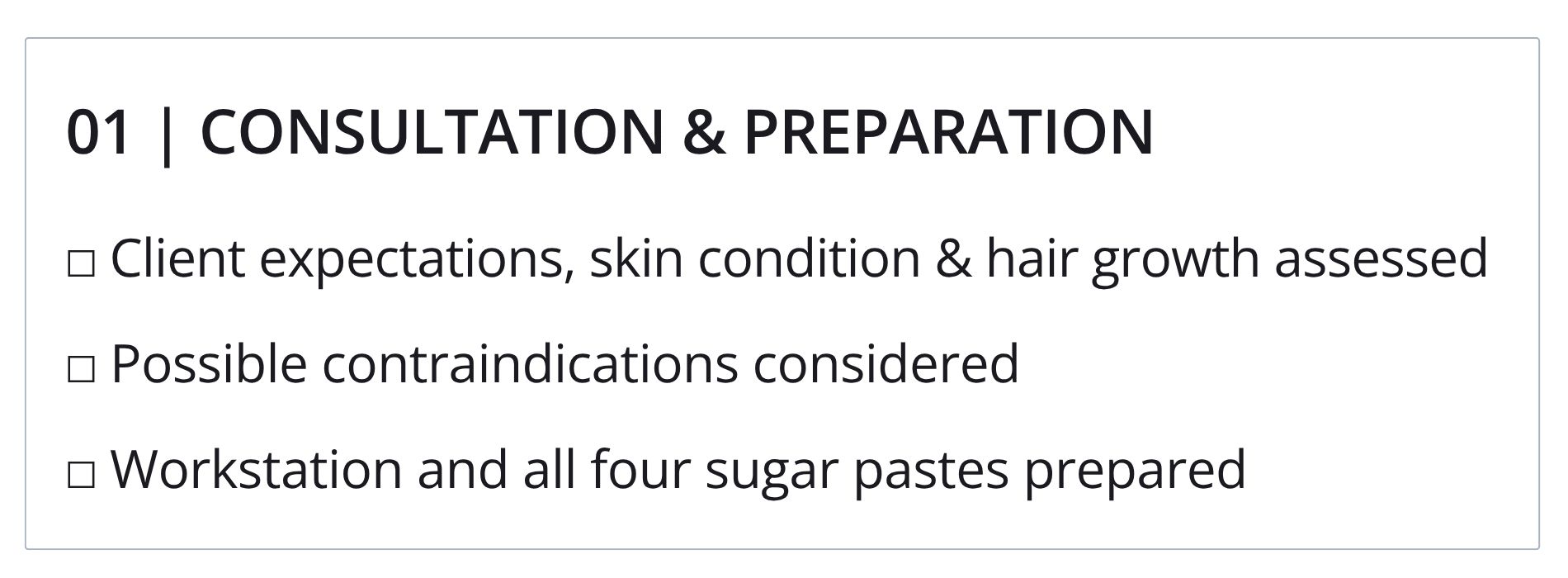
YOUR SUGARING CHECKLIST
PRACTICAL SUGARING KNOW-HOW FOR YOUR DAILY STUDIO WORK
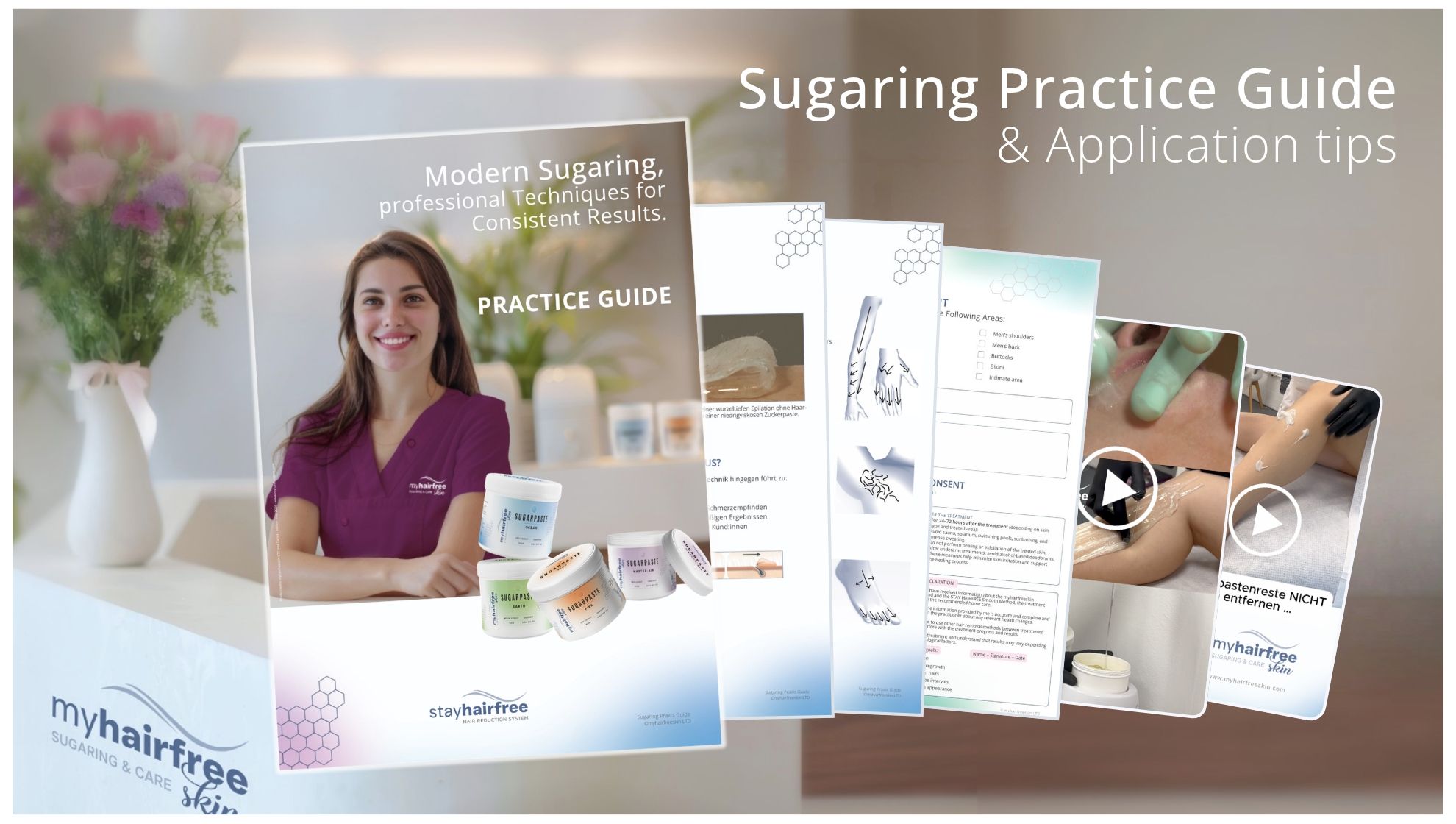
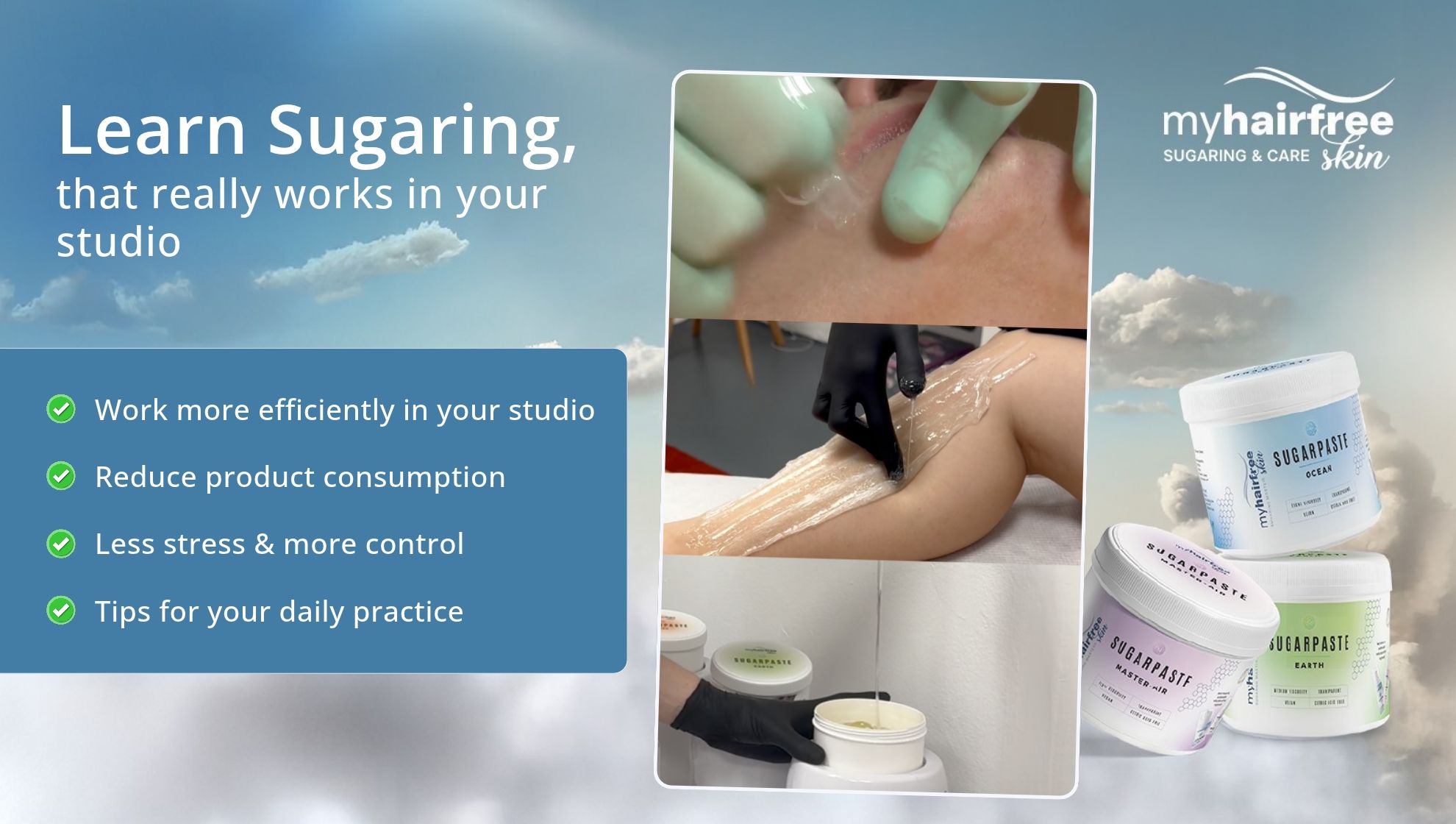
Enhance your sugaring skills with our Sugaring Practice Guide and Video Library – for better control of sugar paste, practical solutions to common application challenges, and more efficient studio workflows.
HANDS-ON SUGARING TRAINING